Introduction
A beach mat looks simple, but it’s a small “materials engineering” problem: woven fibers trap sand, waterproof coatings can delaminate, and fabric mats can hold moisture long enough to grow mildew. The result is that one universal wash method doesn’t exist.
This guide explains how to wash a beach mat by material type, with practical steps that protect the mat’s structure and finish. You’ll also learn why rinsing sea salt first matters, and why mold removal is more important than getting every grain of sand out.
[📊 Cite: Outdoor textile care best practices and mildew risk guidance (consumer care guides; textile/outdoor gear cleaning recommendations).]
Why washing a beach mat “by material” matters
Material-specific washing matters because different mats fail in different ways.
Woven beach mats fail when fibers swell, crack, or fray after soaking or aggressive scrubbing. Waterproof mats fail when heat, harsh detergents, or agitation damages the coating or backing. Fabric mats fail when detergent residue attracts dirt or when moisture stays trapped and leads to mildew.
The safest rule: treat your mat like the most fragile component in it—usually the weave, binding, seam tape, or waterproof coating.
Before you wash: salt-first, then sand, then stains
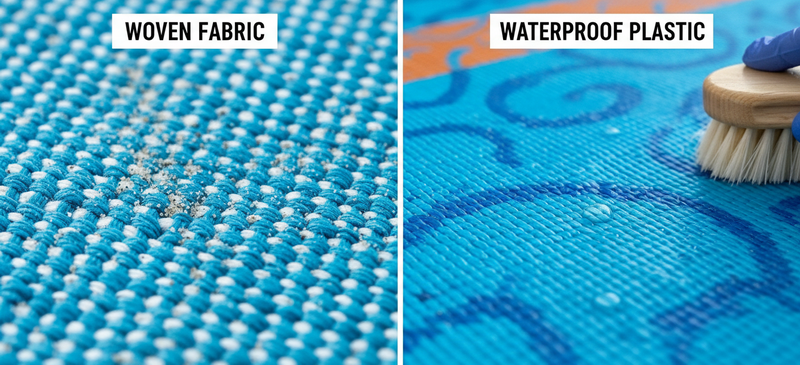 The best cleaning sequence is always: rinse salt → remove sand → treat stains.
If you skip the salt rinse, salt crystals can behave like abrasives during scrubbing. Additionally, salt left in fibers can attract moisture, increasing mildew risk.
Step 1: Shake and dry-brush sand (before adding water)
Sand is easiest to remove when it’s dry.
- Shake the mat outside (hold two corners and “snap” it).
- Use a soft brush to sweep sand out of seams, folds, and edging.
- If the mat has a textured surface, brush in the direction of the weave or texture.
Avoid vacuuming a wet mat—fine sand can clog filters and the mat can stay damp longer.
Step 2: Rinse off sea salt thoroughly
Sea salt should be removed before soap.
- Use a gentle stream of cool water (hose or shower).
- Rinse both sides, especially edges and stitched binding.
If you’re traveling, even a quick rinse in a hotel shower is better than letting salty water dry into the fibers.
Step 3: Spot-test cleaning products
Before applying any cleaner broadly, test a small hidden area to ensure it doesn’t discolor dyes or cloud waterproof coatings.
How to wash a woven beach mat (straw, reed, rattan, bamboo-style)
A woven beach mat should be cleaned with minimal soaking, because prolonged water exposure can warp fibers and weaken the weave.
In practice, this means rinse quickly, clean gently, and dry fast.
What you’ll need
- Soft brush (or old toothbrush for edges)
- Mild dish soap or gentle detergent
- Sponge or microfiber cloth
- Cool water
- Towel + drying rack (or clean line)
Step-by-step: woven mat cleaning
- Dry sand removal first: shake + brush thoroughly.
- Quick rinse: lightly rinse to remove salt—do not soak in a tub unless the care label allows it.
- Gentle wash: mix a few drops of mild soap in a bucket of cool water.
Wipe or lightly scrub with a sponge/soft brush. - Rinse again: remove soap residue with a quick rinse.
- Towel blot: press (don’t wring) to pull water out.
- Dry flat or slightly angled: place in shade with airflow. Flip once the top feels dry.
What to avoid for woven mats
- Hot water (can warp fibers and loosen adhesives)
- Long soaking
- Bleach (can weaken natural fibers and discolor)
- High heat drying
Pro tip: If your woven mat has fabric edging, keep that edging from staying wet. Edges are the most common mildew zone.
How to wash a waterproof beach mat (polypropylene, PVC-backed, coated fabrics)
A waterproof beach mat is usually best cleaned by wiping or rinsing—aggressive scrubbing and heat can damage the waterproof layer.
Think “car interior cleaning,” not “laundry day.”
Common waterproof mat types
- Woven polypropylene (PP): often marketed as “plastic woven” picnic/beach mats.
- PVC-backed mats: fabric top with plastic backing.
- Coated fabrics: PU/PVC coating on textile base.
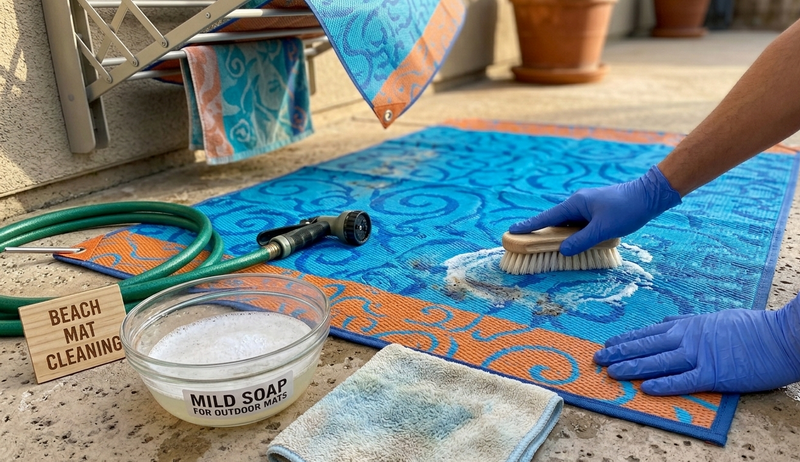
Step-by-step: waterproof mat cleaning
- Shake/brush sand while dry.
- Rinse salt off with cool water.
- Wipe-clean with a sponge and mild soap solution.
- Rinse lightly to remove soap film (soap residue can attract dirt).
- Dry completely: hang or lay flat in shade with airflow.
Stain tips for waterproof mats
- Sunscreen and body oil: use a tiny amount of dish soap and warm-ish (not hot) water.
- Sticky residue: try diluted soap first; avoid strong solvents unless the label permits.
How to wash fabric beach mats (cotton, canvas, microfiber)
Fabric beach mats can often be hand-washed or machine-washed, but only if the construction and label allow it.
The goal is to remove salt and oils without leaving detergent behind.
Can you machine wash a beach mat?
You can machine wash a beach mat only if the care label says it’s machine washable and it does not include fragile coatings, glued layers, or stiff inserts.
If the mat has a waterproof backing, foam layer, or stitched-in padding, machine washing may cause delamination or clumping.
Machine-wash method (when label allows)
- Shake out sand thoroughly (do this outside; sand + washer = bad combo).
- Pre-rinse salt in a tub or shower.
- Wash on cold, gentle cycle with a small amount of mild detergent.
- No fabric softener (can reduce absorbency and trap odors).
- Extra rinse if the mat feels “soapy.”
- Air dry (avoid high-heat dryers unless label explicitly allows).
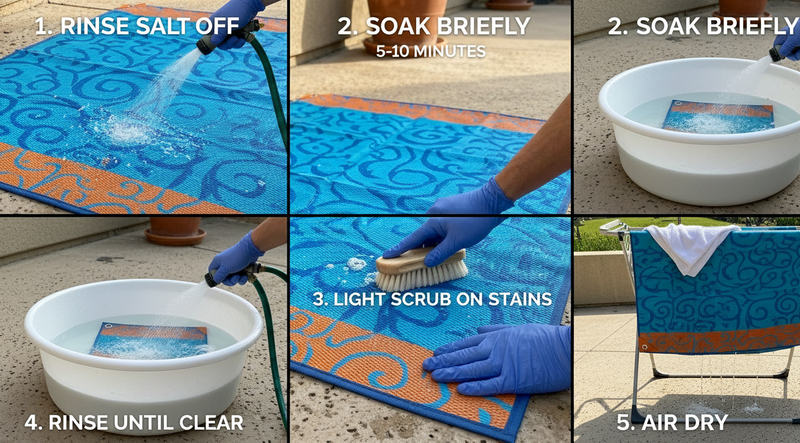
Hand-wash method (safer default)
- Rinse salt off first.
- Soak briefly (5–10 minutes) in cool water with mild detergent.
- Light scrub on stains.
- Rinse until water runs clear.
- Press out water with a towel, then air dry.
Mold removal: what works and what to avoid
Mold (or mildew) should be treated as the priority because it can permanently stain fibers and create ongoing odor—even after the mat looks “clean.”
Sand is annoying, but mold can ruin the mat.
Quick mold triage (all materials)
- Take the mat outside (avoid spreading spores indoors).
- Dry-brush the affected area gently.
- Use the appropriate cleaner for the material (below).
- Rinse and dry fully with airflow and sunlight where safe for the material.
Mold removal by material (safe options)
- Waterproof mats (PP/PVC-coated): mild soap + water first. If needed, use a diluted vinegar solution on the surface, then rinse thoroughly.
- Fabric mats: enzyme-based laundry detergent can help; oxygen-based stain removers are often safer than chlorine bleach.
- Natural woven mats: avoid soaking harsh solutions. Use very mild soap and quick wipe/rinse, then dry fast.
Avoid: heavy bleach on natural fibers, high heat on coated mats, and prolonged soaking that keeps the mat wet longer (which can worsen mildew).
[📊 Cite: General mildew prevention guidance emphasizing drying and airflow; consumer cleaning recommendations for mold/mildew on textiles.]
Drying and storage: the biggest factor in mat lifespan
Drying is the most important step in how to wash a beach mat—because “clean but damp” becomes mildew fast.
Best drying practices
- Dry in shade with airflow to protect dyes and coatings.
- Flip the mat halfway through drying.
- Ensure seams, edging, and corners are dry—these trap moisture.
Storage practices that prevent mold
- Store only when completely dry.
- Use a breathable bag (or leave slightly open).
- Avoid leaving mats in car trunks for days (heat + humidity accelerates odor and coating damage).
[🎯 CTA: Add a simple “post-beach rinse + dry” routine to your team checklist or customer care card—it's the easiest way to cut returns and extend product life.]
Material-by-material wash guide table
| Material Type | Best Cleaning Method | Can You Machine Wash? | Biggest Risk | Drying Tip |
|---|---|---|---|---|
| Woven natural (straw/reed/rattan/bamboo-style) | Quick rinse + gentle wipe/soft brush | Usually No | Warping, fiber breakage, mildew at edges | Dry flat/angled in shade, high airflow |
| Woven polypropylene (plastic woven) | Rinse + wipe with mild soap | Sometimes (label-dependent) | Abrasion and odor if soap residue remains | Hang to drain; rinse thoroughly |
| PVC-backed / coated mats | Wipe-clean + light rinse | Usually No | Delamination, coating clouding | Air dry; avoid heat/sun baking |
| Fabric (cotton/canvas/microfiber) | Hand wash or gentle machine wash | Often Yes (if label says) | Shrinkage, residue, mildew if stored damp | Towel press + air dry fully |
Key Takeaways
- How to wash a beach mat depends on the material—woven, waterproof, and fabric mats should not be cleaned the same way.
- Always rinse off sea salt first, then remove sand, then treat stains.
- Mold removal matters more than sand: mildew can permanently stain and keep odors returning.
- Machine washing is safe only when the care label allows it, and typically only for certain fabric mats.
- The fastest way to extend mat life is complete drying + breathable storage.
[🎯 CTA: If you sell beach mats, include a “Material-Type Care Guide” insert (or QR page) to reduce damage claims and improve customer satisfaction.]
FAQ Schema
Q: How do I wash a beach mat without damaging it?
A: The safest way to wash a beach mat is to rinse off sea salt first, shake/brush out sand while dry, then clean gently using mild soap. Use minimal soaking for woven mats, wipe-clean methods for waterproof mats, and label-approved washing for fabric mats. Always air dry completely.
Q: Can you machine wash a beach mat?
A: You can machine wash a beach mat only if the care label explicitly allows it and the mat does not have fragile coatings, glued layers, or stiff inserts. Use a cold gentle cycle, mild detergent, no fabric softener, and air dry to reduce damage risk.
Q: How to clean a woven beach mat if it smells musty?
A: To clean a woven beach mat with musty odor, remove sand dry, do a quick salt rinse, then wipe with mild soapy water using a soft brush. Avoid long soaking. Dry fully in shade with strong airflow, focusing on edges and binding where mildew often forms.
Q: How to wash a waterproof beach mat after the ocean?
A: To wash a waterproof beach mat, rinse both sides with cool water to remove salt, then wipe with a sponge and mild soap. Rinse lightly to prevent soap film, and air dry completely. Avoid high heat and harsh chemicals that can damage coatings.
Q: What’s the best way to remove mold from a beach mat?
A: The best way to remove mold from a beach mat is to treat it outdoors, dry-brush spores gently, clean with a material-safe solution (mild soap first; oxygen-based cleaners for many fabrics), rinse well, and dry completely. Prevent recurrence by storing only when fully dry.