How We Evaluated These Sustainable Options
To help B2B buyers and conscious consumers make informed decisions, we evaluated dozens of sustainable beach bags based on their lifecycle impact, material certifications, and functional performance in coastal environments.
| Evaluation Criteria | Weight | Description |
|---|---|---|
| Material Integrity | 40% | Use of GOTS-certified cotton, recycled plastics, or biodegradable fibers. |
| Durability | 30% | Resistance to UV rays, salt water, and sand abrasion. |
| Ethical Production | 20% | Fair trade certification and transparent supply chain practices. |
| Functionality | 10% | Weight capacity, water resistance, and organizational pockets. |
1. Recycled Ocean Plastic Totes — Best for Marine Conservation
Rating: ⭐ 4.9/5
Recycled ocean plastic bags are the gold standard for sea-loving travelers. These bags are typically made from intercepted plastic waste or "ghost" fishing nets, transformed into high-performance rPET fabric.
Pros:
- 100% waterproof and sand-proof.
- Extremely lightweight and foldable for luggage packing.
- Directly contributes to cleaning ocean ecosystems.
Cons:
- May release microplastics if machine-washed (use a Guppyfriend bag).
[📊 Cite: Global Ocean Cleanup Data 2025]
2. Organic Hemp Canvas Bags — Best for Heavy-Duty Use
Rating: ⭐ 4.8/5
Hemp is one of the most sustainable fibers on earth, requiring 50% less water than cotton. Hemp beach bags are naturally antimicrobial and UV-resistant, making them ideal for long days in the sun.
Pros:
- Naturally resistant to mold and mildew.
- Gets softer with every wash without losing tensile strength.
- Carbon-negative crop.
Cons:
- Heavier than synthetic alternatives when wet.
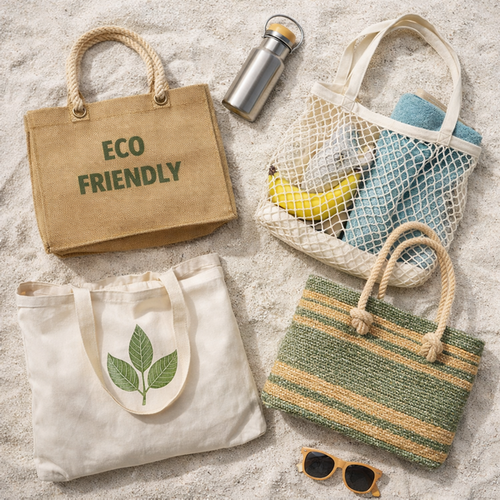
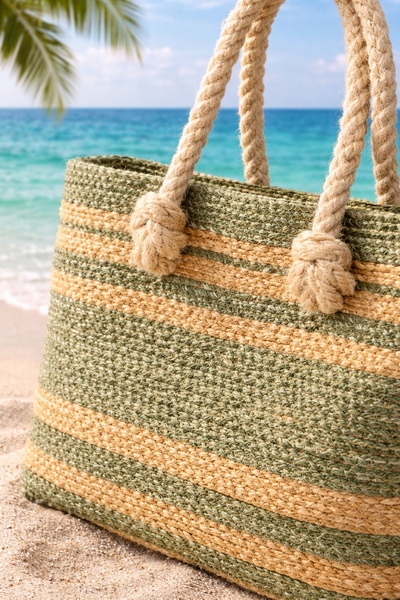
3. Hand-Woven Raffia & Jute Totes — Best for Aesthetic & Biodegradability
Rating: ⭐ 4.7/5
For those seeking a classic "vacation look," raffia and jute are natural plant fibers that are completely biodegradable. Most are artisanal products that support rural weaving communities.
Pros:
- 100% compostable at the end of its life.
- Breathable material prevents "wet towel smell" inside the bag.
Cons:
- Not suitable for carrying very heavy or sharp objects.
Comparison Summary: Which Material Suits You?
| Material Type | Sustainability Level | Durability | Best For | Price Range |
|---|---|---|---|---|
| Recycled Plastic | High (Circular) | High | Water Activities | $$ |
| Organic Hemp | Very High | Excellent | Heavy Loads | $$$ |
| Jute/Raffia | Maximum (Bio) | Moderate | Fashion/Lifestyle | $ - $$ |
| Organic Cotton | High | Moderate | Light Travel | $ |
How to Choose the Right Eco-Friendly Beach Bag
- Check the Certifications: Look for GOTS (Global Organic Textile Standard), GRS (Global Recycled Standard), or Fair Trade labels to ensure the "eco-friendly" claim is verified.
- Consider the "Afterlife": Is the bag recyclable or biodegradable? Avoid mixed-material bags (e.g., cotton blended with virgin polyester) as they are difficult to recycle.
- Hardware Matters: Ensure zippers and buttons are made from lead-free metal or recycled materials rather than virgin plastic.
[
FAQ Schema
Q: Are eco-friendly beach bags as durable as traditional plastic ones? A: Yes. Materials like hemp and high-quality rPET (recycled plastic) often exceed the lifespan of cheap virgin plastic bags because they are designed for reuse and heavy-duty performance.
Q: Can I wash my sustainable beach bag? A: Most organic cotton and hemp bags are machine washable. However, for hand-woven jute or raffia, spot cleaning with a damp cloth is recommended to maintain the fiber structure.
Q: Why are eco-friendly bags more expensive? A: The cost reflects fair wages for artisans, the high expense of processing recycled materials, and the use of non-toxic dyes which are safer for the environment.
Key Takeaways
- Recycled rPET is the best choice for those who need a waterproof, sand-resistant bag.
- Hemp and Jute offer the lowest carbon footprint and are fully biodegradable.
- Always verify sustainability claims through third-party certifications like GOTS or GRS.
- Investing in a high-quality eco-friendly bag reduces the "cost-per-use" and keeps plastic out of our oceans.
[🎯 CTA: Contact our sourcing team for bulk wholesale orders of certified eco-friendly beach bags for your resort or retail store.]